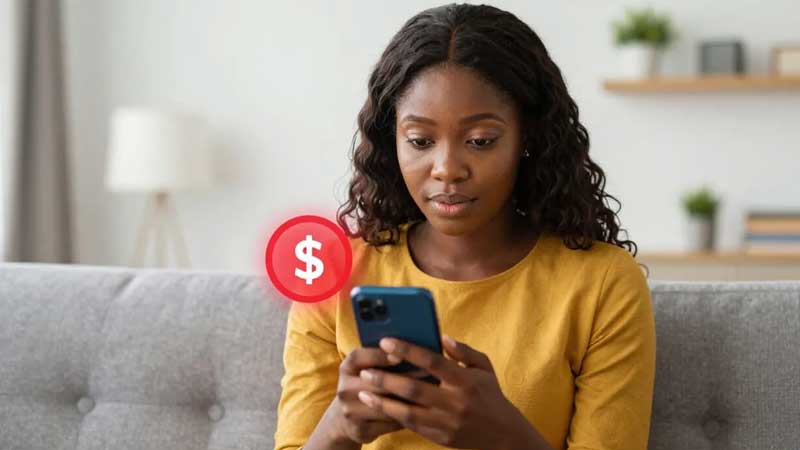
If you have ever tried online dating in Nigeria, then you already know how it usually starts. One friendly “Hi.” One decent profile picture. A few chats here and there. Before you know it, someone is calling you “baby” by the third day. Sometimes even by the second.
Online dating can be beautiful. Many people have found real love online. Real marriages. Real relationships that started with simple chats on a screen. So no, online dating itself is not the problem.
The problem starts when emotions move faster than common sense.
That is why there is one rule that sits above every other rule in online dating in Nigeria. One rule that can save your heart, your peace, and your bank account.
Never send money to someone you have never met in real life.
Not transport fare. Not emergency money. Not “small help.” Not even airtime. Nothing.
This rule is not coming from fear. It is coming from reality.
In Nigeria’s online dating space, one pattern shows up again and again. Someone builds emotional connection fast. They sound caring. They text every morning and night. They share personal stories. Then suddenly, there is a problem that needs money.
And once money enters the conversation before meeting, the story almost always ends badly.
Let me paint a familiar picture.
You meet someone online. They seem normal. Educated. Well spoken. They ask about your day. They remember small details. They say things like, “I’ve never felt this kind of connection before.” You start feeling special. Chosen.
Then one day, something happens.
“My phone broke, I can’t come and see you unless you help me.”
“I need transport fare, baby.”
“I have an emergency, please send small money.”
“I want to travel to see you but something came up.”
These lines are so common that many Nigerians can recite them without thinking.
The stories always sound reasonable. After all, things do happen in real life. Transport money is not a crime. Emergencies are real. Phones do spoil.
But here is the hard truth.
When someone you have never met asks you for money, they are asking you to trust a story you cannot verify. And scammers live on stories.
In Nigeria, online romance scams are not rare. They are structured. Some people do it as full time work. Some work in groups. Some even rotate profiles. One person chats, another collects money, another disappears.
What makes it painful is not just the money lost. It is the emotional damage. The embarrassment. The silence when you finally realize you were played.
Many victims do not even tell their friends. They just move on quietly, carrying shame they should never carry.
I once heard a woman say, “It wasn’t the fifty thousand that hurt me. It was knowing that everything he said was planned.”
That sentence stays with you.
The truth is, real interest does not need financial proof. Someone who genuinely wants to meet you will find a way without collecting money from you. Adults solve their logistics without leaning on strangers they have not met.
Think about it calmly.
If someone cannot afford transport to see you, how are they planning a relationship?
If every solution leads to your wallet, what happens tomorrow?
If the connection is real, why is money entering the picture so early?
In Nigerian culture, we value generosity. We help family. We help friends. We even help strangers sometimes. That generosity is beautiful. But online dating is not the place to practice blind giving.
Love does not ask for transfer alerts before first meeting.
Some people will try to guilt trip you. They will say things like, “So you don’t trust me?”
Others will say, “I thought you were different.”
Some will turn it into an emotional test. “If you really care, you would help.”
This is emotional manipulation. Plain and simple.
Trust is built through consistent actions over time, not through emergencies that always involve money.
Let us be honest. If you truly wanted to meet someone you like, and transport was the only issue, you would suggest a closer meeting point. Or reschedule. Or find another solution. You would not start asking for money from someone you have never seen face to face.
Another red flag is speed.
When emotions escalate too quickly, be careful. When someone is already talking about marriage in one week, be careful. When they say you are the only one who understands them, be careful.
Scammers rush connection because time is not their friend. The longer you wait, the higher the chance you will notice inconsistencies.
Online dating safety is not about being paranoid. It is about being grounded.
Meet in public places.
Tell a friend where you are going.
Do not overshare personal details too early.
And most importantly, do not send money to someone you have never met.
Some people worry that this rule makes them look “wicked” or “too careful.” It does not. It makes you wise.
A healthy partner will respect boundaries. They will not pressure you. They will not weaponize emotions. They will understand that safety comes first.
Online dating should add joy to your life, not anxiety. It should not make you afraid to open your banking app.
If someone disappears because you refused to send money, take it as protection, not loss. You did not lose a potential partner. You avoided a guaranteed problem.
In Nigeria today, being emotionally intelligent also means being financially alert. Romance scams are not about love. They are about opportunity. And opportunity disappears when boundaries are clear.
So if you remember nothing else from this article, remember this one rule.
Never send money to someone you have never met.
Not today. Not tomorrow. Not ever.
Your heart deserves real connection. Your money deserves respect. And your safety always comes first.
Online dating can work. Many people have proof. But it only works when wisdom is louder than feelings.
Protect yourself. Always.